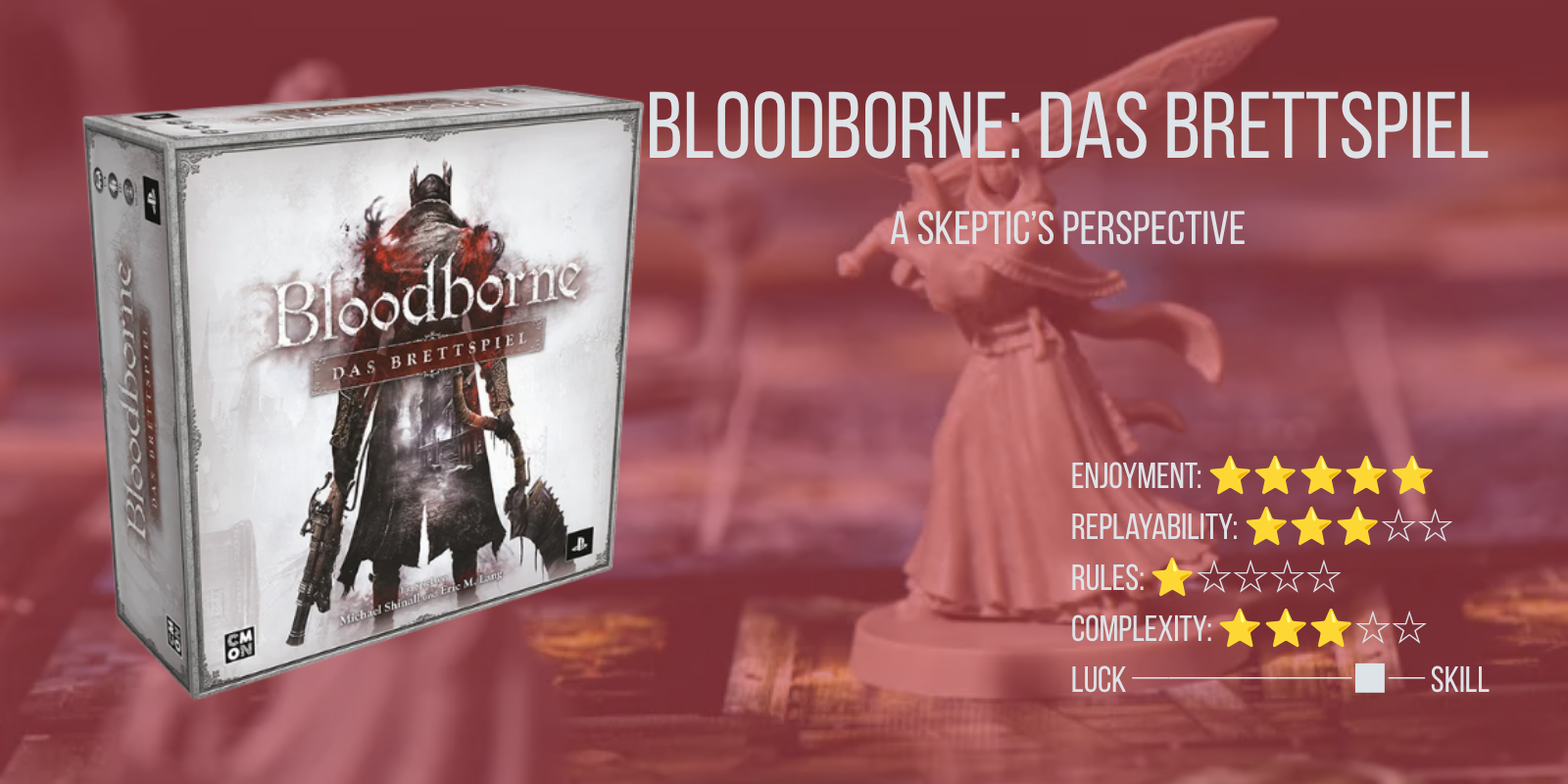
English title: Bloodborne: The Board Game
Enjoyment: ⭐⭐⭐⭐⭐
Replayability: ⭐⭐⭐☆☆
Rules: ⭐☆☆☆☆
Complexity: ⭐⭐⭐☆☆
Luck ──────■─ Skill
First things first: I have never played the video game and know nothing about its lore or digital mechanics. My brother, however, is a massive fan. When we decided to upgrade our shared board game collection, this was at the top of his wishlist. I was deeply skeptical. What little I had seen online didn’t appeal to me at all — mostly because my personal taste leans heavily toward bright, colorful board games rather than murky gothic horror.
Still, we broke it out for a two-player campaign (with him running the Saw Cleaver and me on Ludwig’s Holy Blade).
The Onboarding Nightmare (and That Rulebook)
Our first attempt went terribly. Setup took ages, the rulebook felt completely disjointed, and we threw in the towel before even reaching the halfway mark of chapter one.
We tried again the next day. Setup was significantly faster once we knew where the components lived, but the rulebook genuinely needs another round of revisions with input from someone completely unfamiliar with the IP. It constantly blurs the lines between what is a defined keyword and what is just flavor text. The biggest offender for us was the vague objective wording — being told you need two insight to progress with zero clear signposting on how that translates across insight missions, insight markers, and campaign cards. Expect to keep your phone nearby to look up forum clarifications and official FAQ threads during your first run.
Combat & Mechanics: A Genuinely Clever Puzzle
Once the rules finally clicked, the game turned out to be far better and more intuitive than the rulebook made it seem.
The medium-weight rating is well-earned. The turn structure itself is straightforward, but the decision space is tight and crunchy. The entire engine runs on hand management and the trick-weapon dashboard:
- Strict Action Economy: Your deck never exceeds 12 cards, meaning every card in hand is a strictly limited resource.
- Tactical Depth: You are constantly agonizing over the slots: Do I have the right cards to empty out my weapon slots or pay to transform it? Do I burn this high-damage attack now, or hold it back so I have a card left to dodge on the enemy’s turn? Is an interrupt card actually viable here, or does the monster’s speed tier beat mine anyway?
- Predictable Risk vs. Bad Luck: Fights are brutal and easily lethal if you miscalculate, but tracking which enemy attacks have been drawn from their mini-deck versus what is still lurking adds a fantastic layer of calculated risk rather than pure random chance.
I’ve seen a lot of reviewers complain about the round-timer doom track, but I actually think it’s essential. Without the pressure of the hunt track, you could just grind endlessly until you were overpowered. The time crunch forces you to pick your battles, prioritize mission objectives, and occasionally sneak around enemies instead of fighting everything in sight.
Table Presence & Production
Fair warning: this game is massive on the table.
It lures you in thinking it has a modest footprint because you start with just your personal dashboards, the hunt board, and a single central tile. Then the map begins to branch. Within an hour, the expanding tiles can easily eat up half of a large dining table. Between the sprawling map, countless card decks that everyone needs to reach, piles of tokens, and a swarm of highly detailed (and honestly awesome) miniatures, you will struggle to read enemy stat cards across the table — let alone find a safe spot to park a drink.
Plan for sessions to run 90 to 120 minutes per chapter once you somewhat know what you’re doing, plus dedicated setup and teardown time.
Replayability & Value
I’m still on the fence about pure base-game replayability. Running through the campaign a second time with the other two Hunters to test their weapon dynamics sounds fun, but I doubt I’d want to run the exact same story chapters a third time once the narrative beats and monster reveals are known. That said, between the multiple branching paths in the box and the sheer volume of campaign expansions available, there are easily dozens of hours of gameplay before repetition becomes a real issue.
The Verdict
I don’t think I’ll ever fall in love with the bleak, grimdark aesthetic, but purely as a game, I’ve had a blast with this.
- Buy it if: You love tight, cooperative, medium-weight hand-management puzzles; you enjoy tactical combat where avoiding fights is as valid as taking them; and you appreciate great miniature quality and high-stakes campaigns.
- Skip it if: You hate time pressure, get frustrated by poor rulebooks, dislike having your progress reset when your character dies, or don’t have the table space to host a small plastic empire.